Be Plastic and Embrace Divergent Thinking
“The ability to look deeply is the root of creativity. To see past the ordinary and mundane and get to what might otherwise be invisible.” Rick Rubin, The Creative Act: A Way of Being
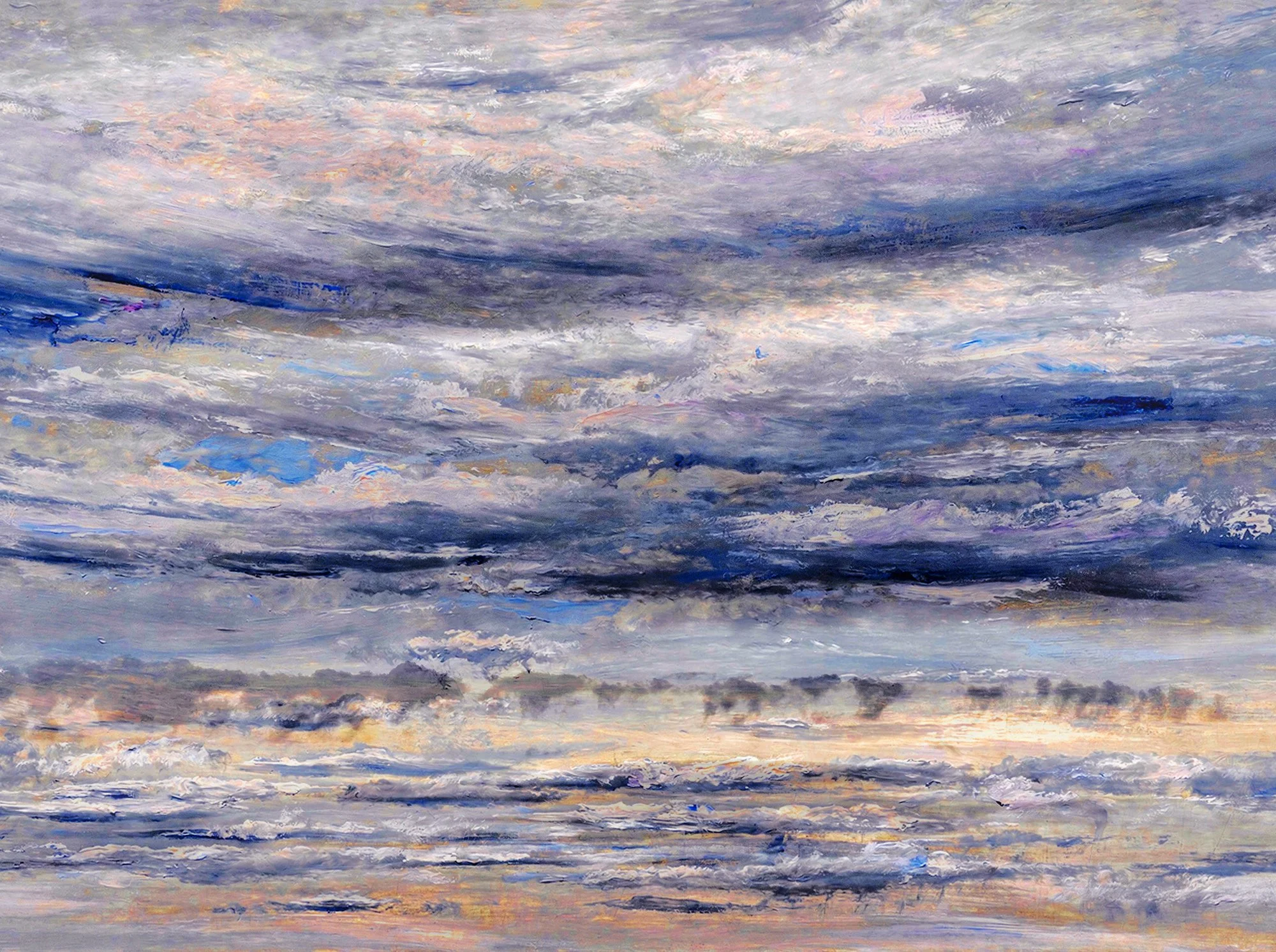
Morning Patterns, 26081NWGFC_4×3, Limited Edition Signed Print
In their book Wired to Create: Unraveling the Mysteries of the Creative Mind, Kaufman and Gregoire recount the history of scientific thinking about creativity. The authors tell us that in 1926, Graham Wallas outlined a four-stage model of the creative process. Wallas described the steps as preparation, incubation, illumination, and verification. This theory was debunked years later. Replacement theories are still debated today; however, most experts agree on one thing: the creative process is not linear. Nor is it a step-by-step formula.
Although artists may not all work in the same way, they do share common traits. Kaufman and Gregoire identify three key factors of a creative personality: plasticity, divergence, and convergence. Plasticity involves identifying and experimenting with new ideas, materials, and methods. Divergence is the willingness to think independently, challenge norms, and act differently. Meanwhile, convergence can be summarized as showing up consistently and applying skills and tools to complete the work.

Passing, 26080NWGFC_4×3, Limited Edition Signed Print
Of course, having these traits doesn’t guarantee a creative life or career. Being creative requires more than amassing a list of skills or mimicking a list of recognized characteristics. It requires building a creative life. A life that incorporates the everyday with creative flow. A life that prioritizes observation, refines sensitivity and thoughtfulness, and interprets and expresses ideas and concepts that emerge along the way. It took me a while to understand this concept. It was difficult not to separate my everyday life events from my creative efforts. In their book Designing Your Life: How to Live a Meaningful Life, Burnett and Evans describe two worlds that are always present in parallel: the transactional world - day-to-day, get-the-job-done, and the flow world - the immediate presence of all that is and is happening at the moment. The goal is to learn how to navigate these two worlds simultaneously.
I now understand that being creative necessitates building a creative life that combines the transactional and flow worlds. It requires noticing and observing, understanding that value, meaning, joy, and wonder are present all the time. A life that absorbs experiences, applies filters when appropriate, and promotes self-expression.

Crown Dynasty, 26024MIBGFNWHX2DC_2×3, Limited Edition Signed Print
Studying these concepts and making sense of them is an important step in my creative development. I know it sounds a bit esoteric. The reality is that understanding the underpinnings helps build confidence and creative direction.
Thanks for tolerating the muse. I hope I haven’t pushed you toward the unsubscribe button!
Cheers
Steve
“Creative persons differ from one another in a variety of ways, but in one respect they are unanimous: They all love what they do. It is not the hope of achieving fame or making money that drives them; rather it is the opportunity to do the work that they enjoy doing.” Mihaly Csikszentmihalyi, Creativity: The Psychology of Discovery and Invention